

Does Dimming the Cabin Lights Actually Help Fliers with Jet Lag?
If you’ve ever taken a long-haul flight and noticed the cabin lights dimming before “sleep time,” you might have wondered: is this just to make things more comfortable—or does it actually help your body adjust to a new time zone?
As it turns out, there’s real science (and serious engineering) behind those gentle lighting fades. Airlines and aircraft manufacturers are investing millions into “circadian lighting” systems designed to help reduce jet lag and improve passenger wellbeing. But does dimming the lights alone make a measurable difference? Let’s unpack what research from airlines, universities, and aerospace engineers actually shows.
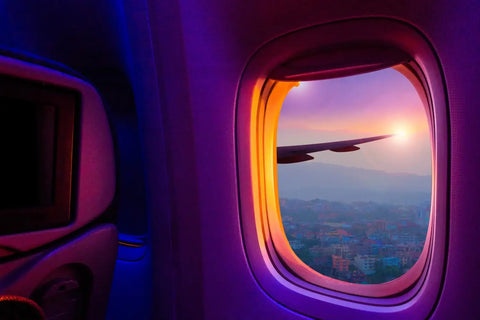
The Science: Why Light Matters for Your Body Clock
Our bodies run on a 24-hour internal clock, known as the circadian rhythm. This biological system tells us when to sleep, wake, eat, and even digest food. The strongest cue that sets this rhythm? Light.
Bright, blue-rich light (like daylight) tells the brain it’s time to be alert. Dim, warm light (like sunset) signals it’s time to rest. When you fly across multiple time zones, your internal clock suddenly falls out of sync with the local daylight cycle—causing that familiar fogginess, fatigue, and irritability we call jet lag.
By controlling the intensity and colour temperature of cabin lighting, airlines can influence when passengers feel sleepy or alert—helping the body gradually align with the destination’s time zone.
Qantas & the University of Sydney: The Sunrise Project
Australian airline Qantas has taken the science of cabin lighting seriously.
In partnership with the University of Sydney’s Charles Perkins Centre, Qantas conducted studies on their ultra-long-haul Project Sunrise flights from Sydney to London and New York.
Their findings? Adjusting cabin lighting schedules—combined with meal timing and sleep cues—significantly reduced jet lag symptoms for passengers and crew.
Instead of keeping lights dimmed simply for ambience, Qantas used dynamic lighting patterns:
- Bright, cool-white light during the “daytime” portion of the flight
- Gradual transitions to warmer, dimmer light to encourage sleep
- Carefully timed light exposure to align with the destination time zone
This strategic light sequencing helped passengers’ circadian rhythms start shifting mid-flight, meaning they arrived feeling more rested and alert.
Technology Behind the Glow: Human-Centric Cabin Lighting
Modern aircraft use sophisticated LED systems that can fine-tune both colour and brightness. Companies like Collins Aerospace and Boeing have developed programmable lighting that can simulate sunrise, midday, and sunset—all inside a sealed aluminium tube flying 40,000 feet above the Earth.
Collins Aerospace’s “Cabin Lighting 2.0” system, for example, allows airlines to program lighting schedules based on flight paths and time zones. Boeing’s Dreamliner aircraft feature a similar system that can reduce blue wavelengths during sleep phases and reintroduce them closer to landing—helping passengers feel like they’ve seen a new dawn at their destination.
These aren’t gimmicks; they’re based on circadian biology. Blue wavelengths are known to suppress melatonin—the hormone that helps us fall asleep—so controlling blue light exposure at the right times can make a real difference in how fast you recover from jet lag.
So… Does Dimming Alone Help?
Here’s the truth: dimming the cabin lights alone doesn’t cure jet lag.
However, dimming as part of a controlled lighting program—with specific timing, colour changes, and gradual transitions—absolutely can help.
It’s not just about making the cabin darker; it’s about telling your body when it’s “night” and when it’s “day.”
When combined with other cues (like meal times, in-flight activity, and limited screen exposure), controlled dimming can:
- Encourage melatonin production (making you feel sleepy)
- Reduce overstimulation and stress hormones
- Improve perceived comfort and sleep quality
- Help your body clock start shifting toward your destination time
Without the right timing, though, dimming might just make passengers drowsy at the wrong moment—or worse, make it harder to stay awake when needed.
Research Highlights: What the Studies Say
- Qantas x University of Sydney (2023): Controlled lighting sequences reduced passenger jet lag by aligning light exposure with destination time zones.
- Collins Aerospace studies: Circadian-friendly lighting design improved alertness and comfort ratings on long-haul flights.
- Harvard Medical School (Sleep and Circadian Disorders research): Exposure to light with reduced blue wavelengths before sleep can enhance melatonin release and sleep onset.
- Boeing 787 trials: Passengers reported improved rest quality and smoother transitions to local time zones on Dreamliner flights using dynamic lighting.
The consistent takeaway? It’s all about timing, intensity, and spectrum—three factors airlines can now control with precision.
Practical Tips for Travellers
You don’t have to rely entirely on the airline to manage your circadian rhythm. Here are a few science-backed ways to reduce jet lag using light exposure:
- Follow the light schedule. When the cabin dims, use that as your cue to rest. Use an eye mask to enhance darkness if needed.
- Limit blue light from screens. Switch your phone or tablet to “night mode” during sleep periods.
- Seek light at the right time. If you land in the morning, get natural sunlight exposure soon after arrival—it helps lock in your new rhythm.
- Stay hydrated and skip heavy alcohol or caffeine close to rest periods.
- Plan ahead. Start adjusting your sleep schedule by one hour per day before your flight, especially for trips spanning 8+ time zones.
The Bottom Line: A Brighter Future for Long-Haul Flights
So, does dimming the cabin lights actually help? Yes—when done intelligently.
Modern aircraft lighting systems are designed with human biology in mind, not just aesthetics. When airlines use them effectively, passengers experience less fatigue, better sleep, and smoother transitions to new time zones.
As lighting technology continues to evolve, we’re seeing the same principles—human-centric, wellness-focused illumination—applied in homes, offices, and even outdoor environments.
At Green Earth Lighting, we believe in lighting that supports wellbeing, whether that’s a smart home system that mimics natural daylight or energy-efficient LEDs that create comfort and calm.